Fashion Jewellery Dropshipping UK: How to Build a Strong Range
A practical guide to product data, materials, packaging, stock, margins, and customer expectations for UK fashion jewellery dropshipping.
Catwalk Dropship Editorial Team
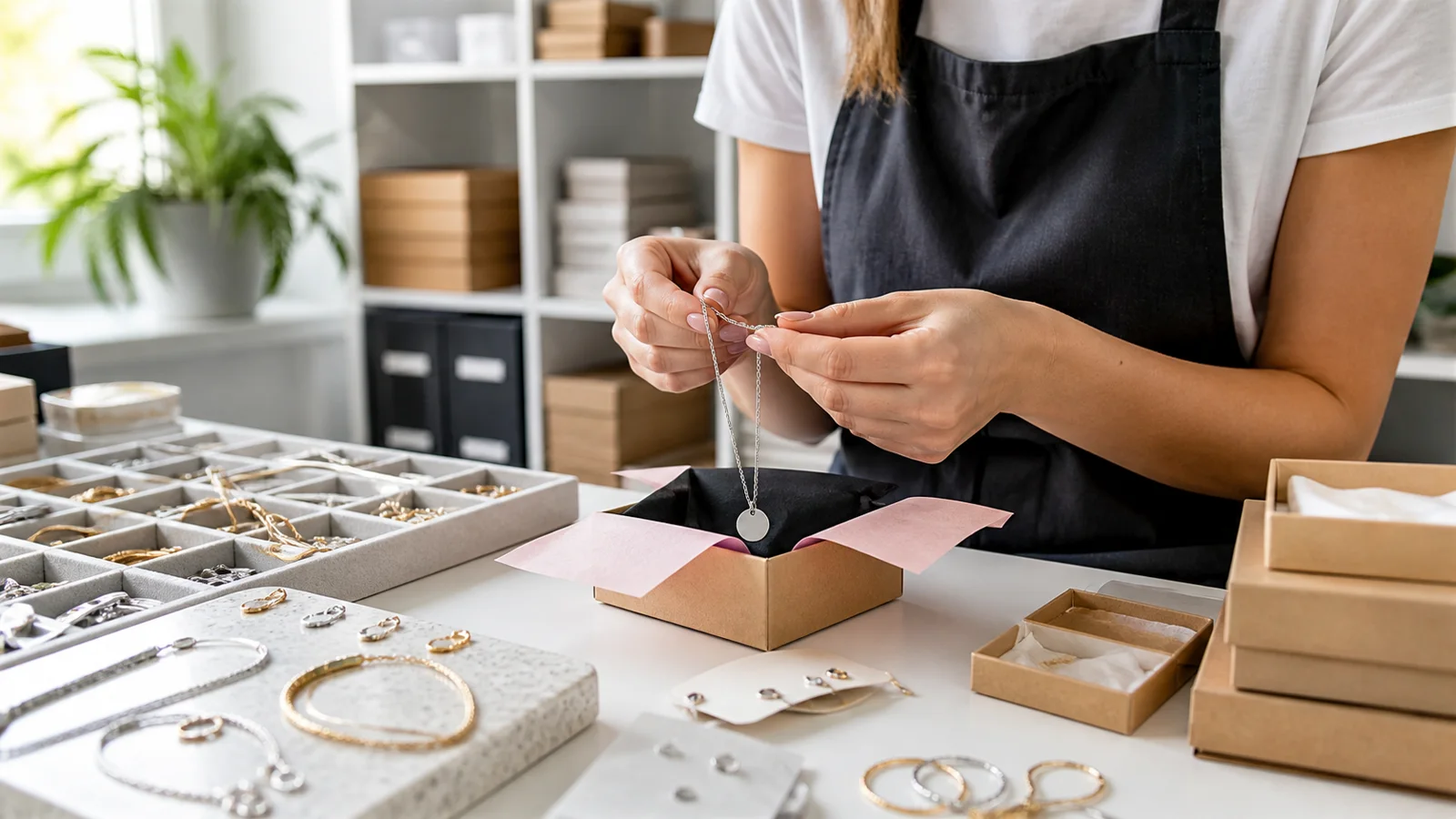
Fashion jewellery can add choice and repeat-purchase potential to an online store without the size complexity of clothing. It is also a category where small inaccuracies cause large trust problems. Customers care about measurements, finish, materials, closures, care, and how the item arrives.
For a jewellery wholesaler, dropshipping can open a broad catalogue to retailers that cannot buy every design in packs. For a retailer, it creates a way to test styles without holding the full range. Both sides need disciplined product data and careful individual packing.
Define exactly what one sellable unit contains
A product record should make clear whether the customer receives one earring, one pair, one necklace, a layered set, a bracelet, or a coordinated multipack. If a charm, backing, extender, pouch, or gift box is included, record that as part of the unit.
Suppliers breaking wholesale packs should give every sellable design and finish a stable SKU. The picker should not have to interpret a photograph to decide which item belongs to the order.
Be precise about materials and finish
Use the most specific description supported by supplier records. Separate the base material from the surface finish and identify stones or decorative components accurately. Avoid terms that imply precious metals, gemstones, hypoallergenic performance, waterproof wear, or permanent tarnish resistance unless the claim is properly supported.
Where relevant, provide care guidance that matches the construction. Customers should know whether to avoid water, fragrance, creams, exercise, or abrasive storage. Retailers should preserve the supplier's factual information when rewriting a product page for their own voice.
Measurements reduce surprises
- Necklace length and extender range.
- Bracelet length or internal diameter.
- Ring size in a named sizing system.
- Earring drop, width, and closure type.
- Pendant, charm, or statement-piece dimensions.
- Approximate weight when an item is notably light or heavy.
Photographs on a model can show scale, but they do not replace measurements. Images should also show the clasp, posts or hooks, back, texture, and each available finish.
Small products still need strong stock control
Jewellery can be easy to misplace or mix because many variants share a tray. Use labelled compartments and keep the operational SKU with the item through picking and packing. Count pairs and sets as complete units, then quarantine incomplete or damaged stock.
If the supplier sells the same inventory through wholesale packs and dropship singles, reserve a buffer and reconcile frequently. This helps the stock feed reflect what the team can actually dispatch.
Add a category-specific quality check
- Match the design, finish, and SKU to the order.
- Confirm pairs, sets, backings, extenders, and included components.
- Test the clasp or fastening without stressing the product.
- Inspect plating, stones, links, posts, and sharp edges.
- Place the item into individual protective packaging.
- Use an outer parcel that prevents crushing and movement.
Protective packaging should suit the item, not just look attractive. Fine chains need to be secured to reduce tangling. Posts and delicate shapes need crush protection. Loose pieces should not move around a large mailer.
Set clear returns and hygiene handling
Retailers should define their consumer return terms using current legal advice and explain any category-specific hygiene conditions clearly. Suppliers and the platform also need a documented inspection route for returned items.
Do not automatically return a worn item to sellable stock. Check seals where used, packaging, missing components, visible wear, odour, damage, and the category's hygiene requirements. Record the result so stock and refund decisions stay aligned.
Merchandise jewellery around a reason to buy
A catalogue becomes easier to shop when products are grouped by customer intent: everyday layers, occasion pieces, gifting, statement earrings, minimalist sets, or finishes that complement a clothing collection. Use cross-selling carefully and keep every linked product in stock.
Retailers should order samples of the products used in advertising. Original close-up images, honest scale, and first-hand care notes add more value than repeating a supplier title. For a wider accessories strategy, see the handbag dropshipping guide.
Check margin at the order level
Jewellery may ship in a small parcel, but individual pick time, protective packaging, payment costs, returns, and customer acquisition still matter. Calculate the contribution on one order and on a realistic multi-item basket. Agree whether several items from the same supplier can be combined into one shipment.
Fashion jewellery launch checklist
- The sellable unit and every included component are unambiguous.
- Materials, finish, dimensions, and care claims are supported.
- Each design and finish has a stable SKU and quantity.
- Fastenings, pairs, sets, and surfaces are checked before dispatch.
- Packaging protects against tangling, rubbing, and crushing.
- Returns and hygiene inspection rules are documented.
Fashion jewellery wholesalers and manufacturers can apply to join Catwalk Dropship as a supplier. Shopify retailers can start a retailer account or review the wider catalogue and fulfilment workflow.